
Empowering Businesses with Smart Digital Solutions WorldwideEmpowering Businesses with Smart Digital Solutions WorldwideEmpowering Businesses with Smart Digital Solutions WorldwideEmpowering Businesses with Smart Digital Solutions Worldwide

In today's competitive digital world, having a professional website is not enough to attract consistent visitors and generate business opportunities. Companies also need a strong online presence, valuable content, and an effective search engine optimization strategy. One important part of off-page SEO is link building, which helps connect your website with other relevant websites across the internet.
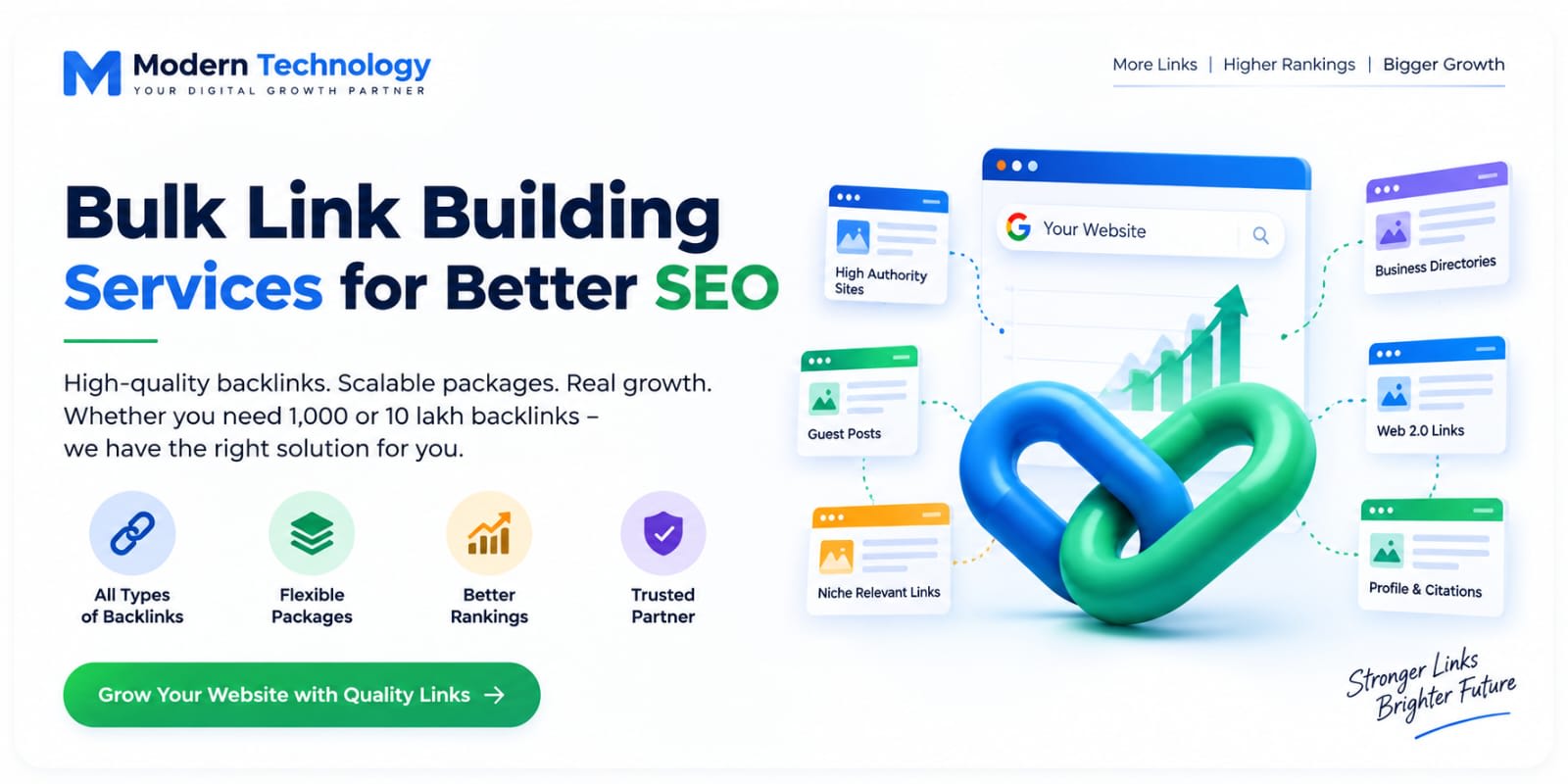
Bulk link building services allow businesses to manage backlink-building activities through structured campaigns and different types of link placements. These may include contextual backlinks, guest posts, high-authority website placements, business directory listings, niche-relevant links, Web 2.0 links, and profile citations.
However, successful link building is not simply about creating thousands of backlinks. Search engines evaluate several factors, including website relevance, content quality, link placement, and the overall naturalness of a backlink profile. Businesses should therefore focus on building meaningful connections rather than choosing backlink packages based only on quantity.
Bulk link building services involve acquiring backlinks from multiple websites and online platforms through an organized process. Instead of managing every backlink opportunity individually, businesses can use structured campaigns to support their broader SEO and digital marketing objectives.
These services can include different link-building methods depending on the industry, website requirements, and campaign goals. For example, an e-commerce company may focus on relevant product and industry publications, while a logistics company may look for links from transportation, shipping, trade, and supply chain websites.
Bulk link building can help businesses manage larger campaigns, but each placement should still be evaluated for relevance and quality.
A properly planned campaign generally considers:
Website niche and target audience.
Relevance of the linking website.
Quality and usefulness of published content.
Placement and context of the backlink.
Anchor text distribution.
Existing backlink profile.
Long-term SEO objectives.
The main purpose is to create a natural and useful backlink profile that supports website discovery, brand visibility, and referral traffic.
Backlinks are links that connect one website to another. When an external website references your content, it creates another way for users to discover your pages.
Relevant backlinks can also help search engines understand the relationship between websites and identify useful resources across different topics.
Here are some important ways quality backlinks can support an SEO strategy.
When your website receives relevant links from external platforms, more users may discover your business while reading articles, exploring industry resources, or searching for related information.
This additional exposure can help businesses reach audiences beyond their existing website visitors.
Links from genuine, relevant, and well-maintained websites can support your brand's online credibility. When other websites reference useful information from your business, it creates opportunities to establish your expertise within your industry.
However, not every backlink has the same value. Website relevance and editorial quality are important considerations.
Backlinks can bring visitors directly from other websites. For example, if a logistics publication links to a useful resource on your company's website, readers interested in logistics may visit your page to learn more.
Such visitors may already have an interest in your products or services, making relevant referral traffic valuable for business growth.
External links can help search engines discover website pages. When your content is referenced by relevant websites, it creates additional pathways through which users and search engines may find your information.
A natural backlink profile can contribute to a broader SEO strategy when combined with technical optimization, quality content, keyword research, and a positive user experience.
Backlinks alone cannot guarantee first-page rankings, but relevant link-building activities can support long-term search visibility.
Every business has different SEO requirements. A successful backlink campaign may combine multiple link-building methods depending on the website's niche, target audience, and objectives.
Contextual backlinks are links placed naturally within the main content of a webpage. They are generally surrounded by information related to the linked website or resource.
For example, an article discussing international shipping solutions may reference a logistics company's website as an additional resource for readers.
Contextual links can provide value when they are placed within useful content and genuinely support the topic being discussed.
Important considerations include:
Relevant article topics.
Natural link placement.
Useful and original content.
Appropriate anchor text.
Editorial quality of the publishing website.
Guest posting involves publishing informative articles on external websites. Businesses can use this approach to share industry knowledge, introduce their services, and reach audiences interested in related subjects.
For example, a technology company may contribute an article about digital transformation to a relevant technology publication.
A good guest post should provide useful information rather than exist only to insert backlinks.
Benefits of guest posting may include:
Increased brand exposure.
Opportunities to reach new audiences.
Relevant referral traffic.
Industry networking opportunities.
Contextual links where editorially appropriate.
Established websites with genuine audiences and strong editorial standards may provide valuable opportunities for brand exposure and referral traffic.
However, a website's authority score alone should not determine whether a backlink is suitable. Businesses should also review its relevance, content quality, audience, publishing practices, and overall reputation.
A relevant website with a genuine audience may be more useful than an unrelated website selected only because it displays a high SEO metric.
Business directories allow companies to publish information such as their business name, website, contact details, address, and service category.
These listings can help customers discover businesses through industry-specific and local directories.
For better results, businesses should focus on:
Relevant and trustworthy directories.
Accurate business information.
Consistent contact details.
Appropriate business categories.
Complete and professional company profiles.
Submitting a business to hundreds of unrelated directories without checking their quality is not a recommended strategy.
Niche-relevant backlinks come from websites that publish content related to your business or industry.
For example:
Logistics businesses can target shipping and transportation publications.
Healthcare companies can explore relevant medical and healthcare resources.
Technology businesses can connect with software and technology websites.
E-commerce brands can explore relevant retail and product-related publications.
Relevance helps ensure that links are placed in an appropriate context and can introduce your business to audiences who may genuinely be interested in your services.
Web 2.0 platforms allow users to create and publish content through online publishing services and community platforms.
Businesses may use these platforms to share original articles, informational resources, and useful content related to their industry.
The focus should remain on content quality and audience value. Creating large numbers of thin, duplicate, or automated pages only to generate backlinks can create SEO risks.
Profile and citation links are created through relevant online platforms where businesses or professionals can maintain public profiles.
These profiles may include a website link, company description, service information, and other business details.
For companies building an online identity, accurate and consistent information across relevant platforms can support brand discovery and trust.
Choosing the right backlink package requires understanding your website's current position and long-term SEO objectives.
A larger package is not automatically better. Before selecting a service, businesses should review the types of websites, link placements, content quality, and overall campaign approach.
Consider these important factors:
Start by identifying your website's industry, target audience, important landing pages, and existing SEO performance.
A new website may need a gradual and carefully planned approach, while an established business may focus on improving its visibility across specific service categories.
Always review whether the linking website is related to your business or the topic of your content.
Links from unrelated websites may provide little meaningful value to your target audience.
If a backlink is included in an article or guest post, the content should be original, informative, and relevant.
Avoid placements surrounded by low-quality, repetitive, or automatically generated content.
Anchor text is the clickable text used in a hyperlink. It should describe the linked page naturally and make sense within the surrounding content.
Using the same commercial keyword repeatedly across a large number of backlinks can create an unnatural link pattern.
Different businesses may have different priorities, such as brand awareness, referral traffic, content discovery, or broader SEO support.
Your backlink strategy should match these objectives instead of focusing only on the number of links delivered.
Link building can support website growth, but poor-quality practices may create unnecessary SEO risks.
Businesses should avoid the following mistakes:
Purchasing large quantities of links without reviewing the websites can result in placements on irrelevant or spam-filled platforms.
Always understand where links will be published and how they will be created.
Publishing the same article across multiple websites does not create meaningful value for readers. Every guest post or content placement should be useful and appropriately written for its intended audience.
Using identical keyword-rich anchor text repeatedly can make a backlink profile appear unnatural. Anchor text should be relevant, descriptive, and varied naturally.
A backlink from a website unrelated to your business may not provide useful audience exposure. Industry relevance should be an important part of placement selection.
SEO is an ongoing process. Backlinks do not guarantee immediate ranking improvements because search engines consider many other factors, including content usefulness, website performance, competition, and technical SEO.
A campaign with thousands of low-quality links may be less useful than a smaller campaign built around relevant and editorially valuable placements.
Google's search spam policies also discourage manipulative link schemes. Businesses should prioritize responsible link acquisition and genuine content value.
A sustainable backlink strategy requires planning, consistency, and regular evaluation.
Businesses can follow a structured process to manage their link-building activities.
Step 1: Analyze Your Existing Backlink Profile
Review your current backlinks to understand which websites are linking to your business, what types of links you have, and whether there are any suspicious patterns.
Step 2: Identify Relevant Websites
Create a list of websites, publications, directories, and platforms that are related to your industry and target audience.
Step 3: Create Valuable Content
Develop useful articles, guides, research, and business resources that other websites may have a genuine reason to reference.
Step 4: Select Suitable Link-Building Methods
Choose contextual placements, guest posts, business directories, niche-relevant links, or other methods based on your actual SEO requirements.
Step 5: Monitor Campaign Quality
Keep records of published links, destination URLs, anchor text, publishing websites, and content quality.
Step 6: Review Performance Regularly
Monitor organic visibility, referral traffic, indexing, and overall website performance. Use these insights to improve future campaigns.
This process helps businesses maintain a more organized and responsible approach to link building.
Modern Technology provides digital growth and SEO-related solutions designed to help businesses strengthen their online presence.
Businesses looking for scalable backlink-building support can explore different link types and campaign options based on their requirements.
Our link-building solutions cover:
Contextual backlinks.
Guest posting opportunities.
High-authority website placements.
Business directory listings.
Niche-relevant backlinks.
Web 2.0 content links.
Profile and citation links.
Whether a business is exploring a smaller backlink campaign or a larger link-building package, the selection process should consider website relevance, content quality, and the overall SEO objective.
A structured approach can help businesses manage backlink activities while keeping long-term digital growth in focus.
Link-building services may be useful for different types of businesses that want to improve their online presence.
Startups and New Businesses: New companies can explore relevant publishing opportunities to introduce their brand to potential customers.
E-commerce Websites: Online stores may benefit from relevant product guides, industry publications, and useful shopping resources that help audiences discover their products.
Digital Marketing Agencies: Agencies may use organized link-building campaigns as part of broader SEO strategies for their clients.
Technology Companies: Software and IT businesses can explore technology publications, industry blogs, and relevant business resources.
Logistics and Export Businesses: Companies working in international trade, freight, and supply chain management can focus on relevant logistics and industry websites.
The right strategy depends on the business niche, existing website quality, and marketing goals.
Bulk link building services can support a business's SEO strategy when they are managed carefully and focused on relevant, useful placements.
Contextual backlinks, guest posts, high-authority websites, business directories, niche-relevant links, Web 2.0 content, and profile citations each offer different opportunities for online visibility and content discovery.
Instead of chasing backlink numbers, businesses should prioritize website relevance, original content, natural anchor text, and responsible link acquisition.
With a structured approach from Modern Technology, businesses can work towards stronger website visibility, better brand exposure, and sustainable digital growth.
Build stronger connections across the web with a backlink strategy that puts quality and relevance first.
Mitsafe Engineering Team — Architecting scalable cloud systems and AI automation workflows.
Have an idea or software requirements? Get expert technical guidance & cost estimate in 24 hours.