
Empowering Businesses with Smart Digital Solutions WorldwideEmpowering Businesses with Smart Digital Solutions WorldwideEmpowering Businesses with Smart Digital Solutions WorldwideEmpowering Businesses with Smart Digital Solutions Worldwide

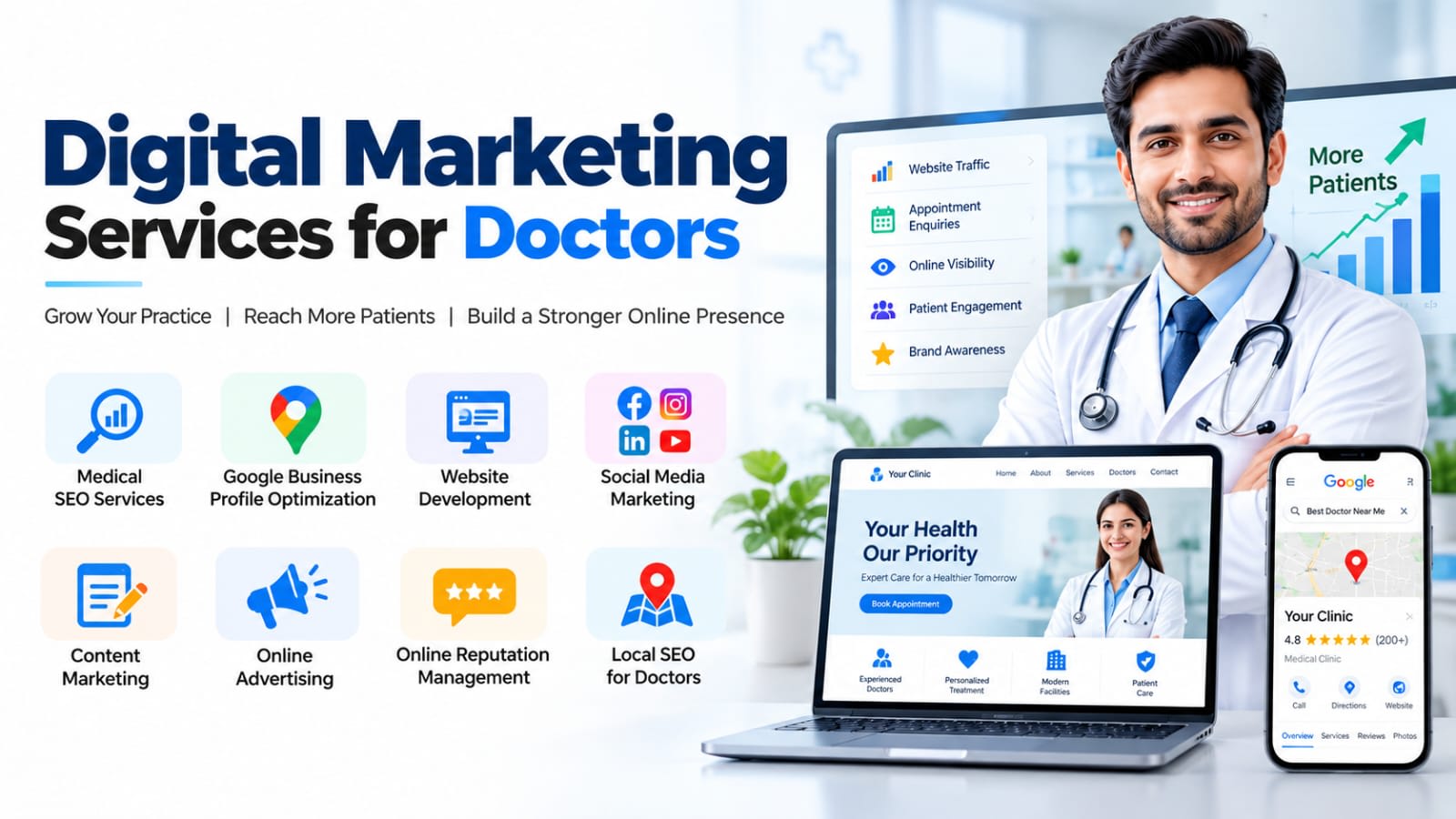
The healthcare industry is becoming increasingly competitive, and patients are now using the internet to find doctors, compare medical services, and choose the right healthcare providers. Whether someone is looking for a specialist, a nearby clinic, or a hospital, their search often begins on Google. Before making an appointment, patients frequently explore websites, read reviews, check doctor profiles, and compare available healthcare facilities.
This changing patient behavior makes digital marketing an essential part of growing a modern medical practice. A strong online presence allows doctors to communicate their expertise, showcase their services, and connect with people who are actively looking for healthcare solutions. With the right digital marketing strategies, healthcare professionals can improve their visibility, build credibility, increase appointment enquiries, and establish a trusted medical brand.
Traditional marketing methods alone may not be sufficient to reach today's digitally connected patients. People expect to find accurate information about doctors, treatments, clinic locations, and appointment availability online. If a healthcare provider has limited online visibility, potential patients may choose another clinic that is easier to discover.
Digital marketing helps doctors reach the right audience through search engines, websites, social media platforms, and online advertising. It also provides opportunities to educate patients, answer common questions, and maintain communication beyond the clinic.
A consistent digital presence can help healthcare providers build recognition, strengthen patient relationships, and support the long-term growth of their medical practice.
Search Engine Optimization (SEO) helps doctors and healthcare websites appear in relevant Google search results. When patients search for medical specialists, specific treatments, or healthcare services in their area, an optimized website has a better opportunity to reach them.
Medical SEO involves keyword research, website content optimization, technical SEO, internal linking, page speed improvements, and creating useful healthcare information. For example, a dental clinic can optimize its website for relevant dental services, while a specialist can create informative pages related to their medical field.
Publishing helpful articles, maintaining accurate service information, and improving website structure can also contribute to better search visibility. Unlike short-term advertising campaigns, SEO focuses on building a sustainable online presence over time.
Google Business Profile is an important platform for doctors, clinics, and hospitals that want to reach patients in nearby locations. It allows healthcare providers to display essential business information directly on Google Search and Google Maps.
An optimized profile should include the correct clinic name, address, contact number, operating hours, website link, photographs, and available services. Doctors should regularly review their business information to ensure that patients receive accurate details.
Genuine patient reviews also play an important role in building trust. Responding professionally to feedback and updating clinic information can improve the overall patient experience. Local SEO combined with Google Business Profile optimization makes it easier for people to discover healthcare services in their preferred location.
A professional website acts as the digital identity of a doctor, clinic, or hospital. It gives patients a convenient platform to learn about medical services, doctor qualifications, specializations, treatment facilities, and appointment options.
A well-designed healthcare website should have a clean layout, mobile-friendly design, fast loading speed, simple navigation, and clear contact information. Important sections may include doctor profiles, departments, available treatments, frequently asked questions, patient information, and location details.
Appointment enquiry forms and easy contact options can make communication more convenient. Website security and regular updates are equally important, particularly when a website collects personal information through enquiry forms.
A professional and informative website helps create a positive first impression while making healthcare information more accessible.
Social media platforms provide healthcare professionals with an opportunity to educate and engage with their audience. Doctors can use platforms such as Facebook, Instagram, and LinkedIn to share health awareness posts, preventive care tips, medical updates, clinic information, and educational videos.
For example, a cardiologist can share general heart health information, while a dermatologist can publish educational content about skincare and sun protection. Such content helps people understand common health concerns and become more familiar with the services offered by healthcare professionals.
Consistency is important in social media marketing. A planned content calendar, informative visuals, and professional communication can help maintain an active online presence. Healthcare content should always be medically accurate and should not promise guaranteed treatment results.
Patient trust plays a major role in healthcare decisions. Before selecting a doctor or clinic, many people check online ratings, reviews, and feedback from other patients. A professional online reputation can help healthcare providers establish credibility and create a positive impression.
Online reputation management focuses on monitoring reviews, responding professionally to feedback, correcting inaccurate business information, and maintaining consistent communication across digital platforms.
Doctors and clinics should encourage honest feedback without pressuring patients to provide positive reviews. Addressing concerns respectfully and protecting patient privacy are essential parts of reputation management.
A strong reputation built through genuine patient experiences can support long-term relationships and improve confidence in healthcare services.
Paid advertising through Google Ads and social media platforms can help doctors reach people searching for specific healthcare services. Unlike general promotional activities, targeted campaigns allow healthcare providers to focus on relevant locations, services, and audience requirements.
For example, a clinic can promote awareness of its available departments among people in its service area. Advertising campaigns can direct visitors to relevant website pages, contact information, or appointment enquiry forms.
Successful campaigns require appropriate keyword selection, relevant landing pages, budget management, and regular performance monitoring. Doctors should also ensure that advertisements follow applicable healthcare advertising guidelines and avoid misleading claims or guaranteed medical outcomes.
Content marketing is another effective way to strengthen the online presence of doctors and healthcare organizations. It involves creating useful and informative content that answers common patient questions and explains healthcare topics in an easy-to-understand manner.
Doctors can publish blogs about preventive healthcare, common medical conditions, treatment procedures, healthy lifestyle practices, and frequently asked questions. Educational videos, infographics, and informative website articles can also help communicate important health information.
High-quality content improves the usefulness of a healthcare website and creates more opportunities to appear in relevant search results. All medical content should be reviewed for accuracy and should clearly communicate when professional medical consultation is necessary.
Most people use smartphones to search for nearby clinics, check doctor information, and contact healthcare providers. Therefore, mobile accessibility is an important part of healthcare digital marketing.
A mobile-friendly website should display properly on different screen sizes, load quickly, and provide easily accessible contact details. Simple enquiry forms, click-to-call options, and clear directions can help patients connect with clinics without unnecessary steps.
Making the online experience convenient can reduce barriers for patients who want to learn about available services or request an appointment.
Digital marketing becomes more effective when healthcare providers regularly evaluate their results. Tracking important performance indicators helps doctors understand which strategies are generating visibility and patient enquiries.
Some useful metrics include website traffic, search engine rankings, Google Business Profile interactions, enquiry form submissions, phone calls, and advertising campaign performance.
By reviewing these results, healthcare providers can identify areas that need improvement, adjust their marketing strategies, and use their budgets more effectively. Regular analysis also helps ensure that marketing activities remain aligned with the clinic's goals.
A well-planned digital marketing strategy offers several advantages to healthcare professionals:
Better Online Visibility: Helps doctors and clinics appear in relevant search results and reach people looking for healthcare services.
More Patient Enquiries: Makes it easier for potential patients to discover medical services and contact healthcare providers.
Stronger Brand Reputation: Builds credibility through professional websites, informative content, and genuine patient reviews.
Local Patient Reach: Helps nearby patients find clinics, hospitals, and medical specialists through local search.
Improved Patient Engagement: Creates opportunities to share useful information and communicate through digital platforms.
Cost-Effective Promotion: Allows healthcare providers to plan marketing activities according to their budgets and business objectives.
Long-Term Business Growth: Builds a consistent online presence that supports recognition and sustainable practice development.
Every healthcare practice has different requirements, specializations, and growth objectives. Therefore, a digital marketing strategy should be selected according to the clinic's services, target locations, audience, and available budget.
A newly established clinic may benefit from local SEO, Google Business Profile optimization, and a professional website. A multi-specialty hospital may require a broader approach involving technical SEO, content marketing, social media management, and carefully planned advertising campaigns.
Doctors should prioritize accurate information, professional communication, patient privacy, and a convenient online experience. Working with a digital marketing team that understands healthcare communication can also help maintain consistency across different platforms.
While building an online presence, doctors and clinics should avoid certain mistakes that can affect their digital reputation and patient experience.
Using outdated contact details or incorrect clinic timings.
Ignoring website speed and mobile responsiveness.
Publishing inaccurate or unverified medical information.
Neglecting genuine patient feedback and online reviews.
Running advertising campaigns without clear objectives.
Using misleading promotional claims or guaranteed treatment promises.
Ignoring website security and patient data privacy.
Avoiding these mistakes helps healthcare providers maintain a professional digital presence and communicate more effectively with their audience.
Digital marketing has become an important part of modern healthcare growth. Patients increasingly depend on online information when discovering doctors, exploring medical services, and selecting healthcare facilities. This creates an opportunity for doctors and clinics to build stronger connections with their target audience through effective digital strategies.
From medical SEO and Google Business Profile optimization to professional website development, social media marketing, content creation, and online reputation management, every service contributes to improving digital visibility.
By choosing the right strategies, sharing reliable healthcare information, and maintaining consistent online communication, healthcare professionals can build a trusted medical brand, attract relevant patient enquiries, and support the long-term growth of their practice.
Mitsafe Engineering Team — Architecting scalable cloud systems and AI automation workflows.
Have an idea or software requirements? Get expert technical guidance & cost estimate in 24 hours.