
Empowering Businesses with Smart Digital Solutions WorldwideEmpowering Businesses with Smart Digital Solutions WorldwideEmpowering Businesses with Smart Digital Solutions WorldwideEmpowering Businesses with Smart Digital Solutions Worldwide

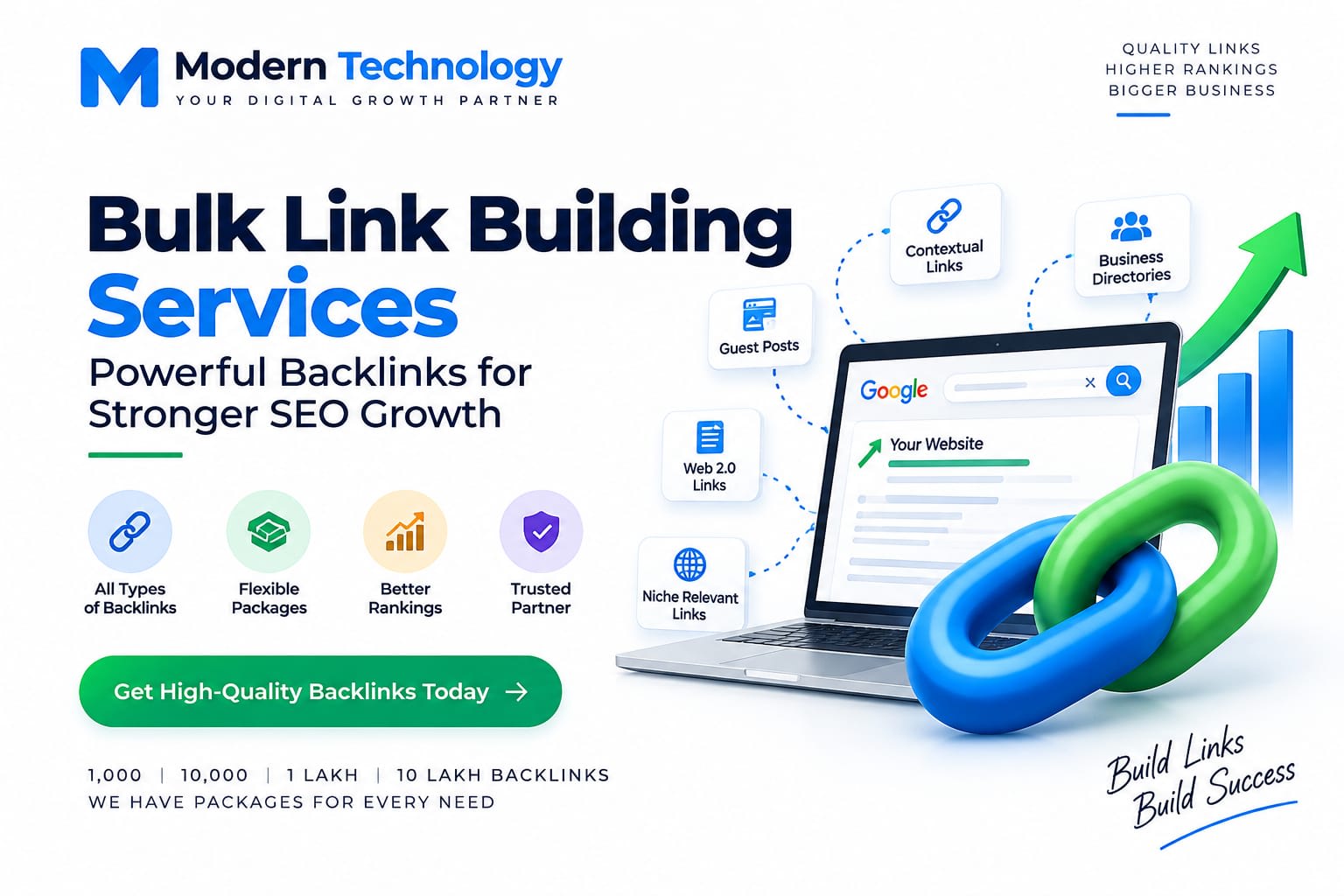
In today's competitive digital environment, having a well-designed website is only one part of building a successful online presence. Businesses also need to improve their visibility in search engines, attract relevant visitors, and establish credibility within their industries.
Search Engine Optimization (SEO) helps websites achieve these goals through technical improvements, useful content, keyword optimization, and off-page strategies. One important part of off-page SEO is link building.
Quality link building focuses on earning relevant backlinks from other websites to strengthen a website's online presence. When approached strategically, it can support search visibility, referral traffic, and long-term digital growth.
Link building is the process of acquiring hyperlinks from external websites that point to your website. These links are commonly called backlinks.
Search engines can use links to discover pages and understand relationships between websites. Relevant, editorially earned links can also provide useful context about a website's content and reputation.
For example, if a technology publication references a useful software development guide and links to the original resource, that backlink may help interested readers discover the business.
However, not every backlink provides the same value. Relevance, editorial standards, placement, and the overall quality of the linking website matter more than simply collecting a large number of links.
Backlinks from relevant and trustworthy websites can help establish credibility within a particular industry. When respected publications naturally reference useful content, they provide readers with an additional source of information.
Relevant backlinks can contribute to a website's overall SEO profile. They may help search engines discover content and understand how different pages and websites are connected.
However, backlinks alone cannot guarantee higher rankings. Search performance also depends on content quality, technical SEO, competition, user experience, and other factors.
A useful backlink can bring visitors directly from another website. When the link appears in relevant content, readers who want additional information may visit the linked website.
Getting mentioned on relevant industry websites can introduce a business to new audiences. Over time, this can help increase brand recognition and create opportunities for partnerships.
Businesses can use several link acquisition methods depending on their industry, audience, and marketing objectives.
Contextual links are placed naturally within relevant website content. These links provide additional information to readers and connect related topics.
For example, an article discussing website security may reference a detailed cybersecurity guide from a technology company.
The link should genuinely support the surrounding content rather than exist only for SEO purposes.
Guest posting involves contributing useful, original articles to relevant third-party websites.
A well-planned guest post can help businesses share expertise, reach a new audience, and earn appropriate editorial references.
The focus should remain on providing useful information instead of publishing repetitive promotional articles solely to obtain backlinks.
Niche-relevant backlinks come from websites that cover topics related to your business or industry.
For example, a software development company may benefit more from relevant technology publications than from unrelated websites with no connection to its services.
Topical relevance helps ensure that links make sense to both readers and search engines.
Business directories allow companies to publish important information such as their business name, website, location, and contact details.
Accurate listings on reputable and relevant directories can improve business discoverability and support local online visibility.
Content publishing platforms can provide opportunities to share useful resources and connect readers with original information.
Businesses should avoid creating large numbers of low-quality or repetitive pages simply to generate backlinks. Content should offer genuine value and follow the platform's guidelines.
One common SEO mistake is focusing only on the number of backlinks a website receives.
A website may have thousands of links, but that does not automatically mean its backlink profile is strong.
Consider two examples:
A software company receives a contextual mention from a relevant technology publication.
The same company receives hundreds of unrelated links from low-quality websites.
The first example may provide more meaningful referral and editorial value, even though it represents only one backlink.
A sustainable link building strategy should prioritize:
Topical relevance.
Genuine editorial value.
Trusted publishing environments.
Natural anchor text.
Useful and original content.
A balanced backlink profile.
The objective should be to build a credible online presence rather than artificially increase link counts.
Poor link acquisition practices can create unnecessary SEO risks.
Buying Large Volumes of Manipulative Links: Automatically acquiring large quantities of links to influence search rankings can violate search engine spam policies.
Using Irrelevant Websites: Links from unrelated websites may provide little value to the audience and can make a backlink profile look unnatural.
Excessive Exact-Match Anchor Text: Repeatedly using the same keyword-rich anchor text can create an unnatural linking pattern.
Publishing Low-Quality Guest Posts: Repetitive articles created mainly to place backlinks may not provide meaningful value to readers.
Ignoring Website Quality: Businesses should evaluate the relevance, editorial standards, and reputation of a potential linking website before pursuing a placement.
Expecting Instant Rankings: Link building is a long-term SEO activity. Rankings depend on many factors, and no backlink campaign can guarantee a particular search position.
A structured approach can help businesses acquire more meaningful links over time.
Identify the pages, services, products, and topics that matter most to your business. Decide whether your primary objective is brand visibility, referral traffic, or improving the overall SEO profile.
Develop informative resources such as detailed guides, research articles, industry insights, and practical tutorials. Useful content gives other websites a genuine reason to reference your pages.
Research websites, publications, directories, and industry platforms that are relevant to your business. Evaluate their audience, content quality, and editorial guidelines.
Contact relevant publishers with useful content ideas or resources. Outreach should be personalized and focused on creating value for their readers.
Review acquired backlinks regularly. Check referring domains, link relevance, anchor text, referral traffic, and suspicious linking patterns.
Track organic traffic, search visibility, referring domains, relevant keyword performance, and conversions. Use the information to improve your SEO strategy over time.
Modern Technology helps businesses strengthen their digital presence through SEO and digital growth solutions.
An effective SEO strategy requires more than acquiring backlinks. It also involves technical website optimization, content planning, keyword research, performance monitoring, and a clear understanding of the target audience.
Businesses can improve their digital growth efforts through:
Search engine optimization and website audits.
On-page and off-page SEO planning.
Contextual and niche-relevant link acquisition strategies.
Guest posting and content outreach.
Business directory listing management.
Website performance and technical SEO improvements.
Organic traffic and search performance analysis.
At Modern Technology, the focus is on combining practical digital marketing strategies with technology-driven solutions to help businesses build a stronger and more sustainable online presence.
Quality link building remains an important part of a broader SEO strategy when it focuses on relevance, editorial value, and genuine audience benefit.
Contextual links, guest posting, niche-relevant references, and reputable business directories can help businesses improve online discoverability and build industry credibility.
Instead of focusing only on backlink quantity, businesses should prioritize a natural, relevant, and carefully monitored link acquisition strategy.
With a combination of technical SEO, useful content, and responsible off-page optimization, Modern Technology helps businesses work toward stronger search visibility and long-term digital growth.
Mitsafe Engineering Team — Architecting scalable cloud systems and AI automation workflows.
Have an idea or software requirements? Get expert technical guidance & cost estimate in 24 hours.