
Empowering Businesses with Smart Digital Solutions WorldwideEmpowering Businesses with Smart Digital Solutions WorldwideEmpowering Businesses with Smart Digital Solutions WorldwideEmpowering Businesses with Smart Digital Solutions Worldwide
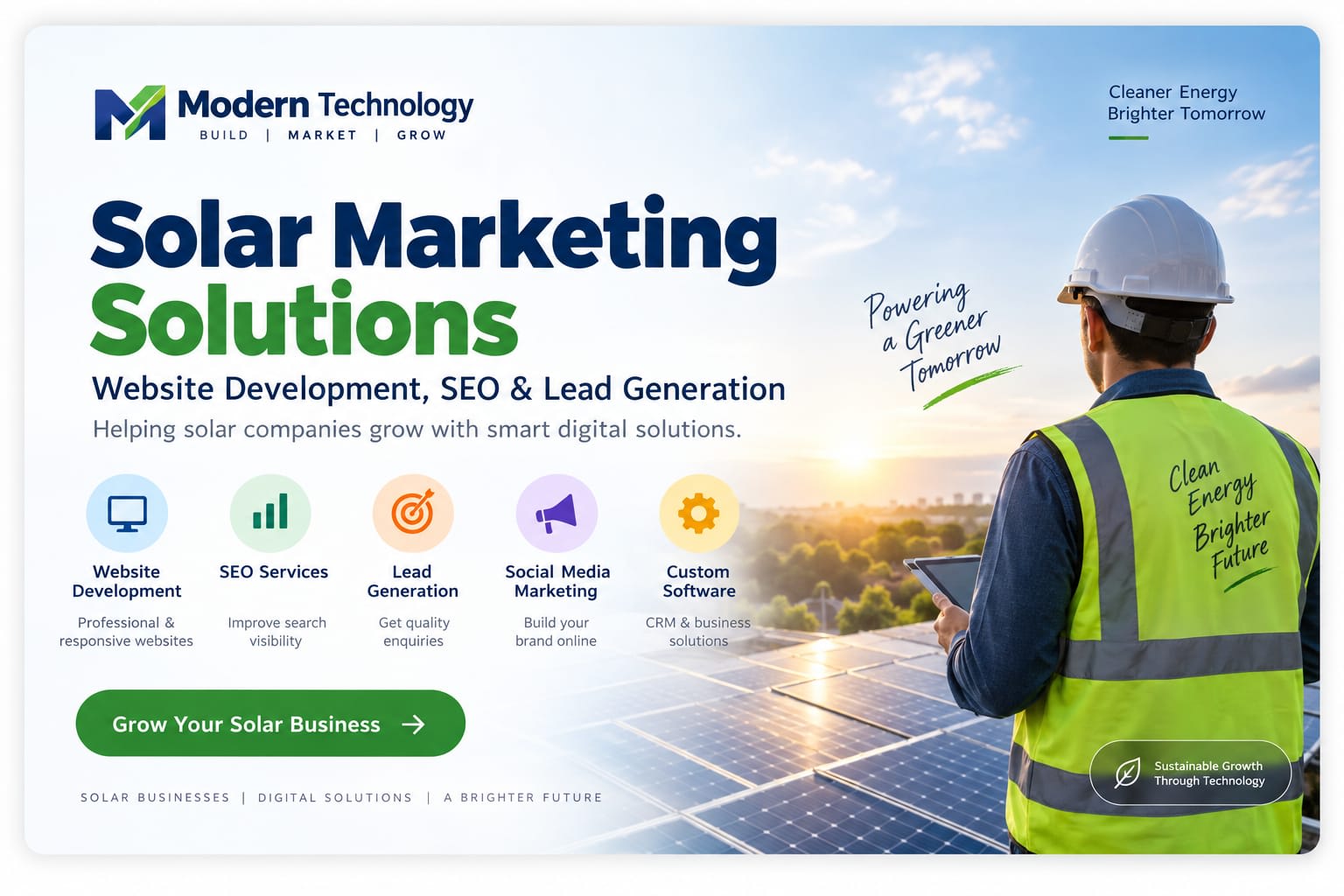
The solar energy industry is experiencing significant growth as individuals, businesses, and industries increasingly shift towards renewable energy sources. Rising electricity costs, environmental awareness, and the need for sustainable energy solutions have encouraged more customers to explore solar power. As competition increases, solar companies need effective ways to reach potential customers and communicate the value of their services.
Solar digital marketing provides businesses with the opportunity to build a strong online presence, attract interested customers, and generate consistent business inquiries. Through search engine optimization, paid advertising, social media marketing, and informative content, solar companies can connect with their target audience and create long-term growth opportunities.
A professional online presence is essential for solar companies that want to establish credibility and attract new customers. Most customers research solar products and installation services online before making a purchasing decision.
A well-designed website helps businesses showcase their services, explain different solar solutions, display completed projects, and provide important company information. Informative service pages and clear contact details also make it easier for visitors to understand what the company offers.
Digital marketing ensures that a solar business is not only visible online but also communicates its expertise and services effectively. A strong online presence helps businesses create a positive first impression and build customer confidence.
Search Engine Optimization (SEO) is one of the most valuable digital marketing strategies for solar companies. It helps websites improve their visibility on search engines when potential customers search for solar-related products and services.
Customers may search for terms such as solar panel installation, rooftop solar systems, commercial solar solutions, and residential solar energy services. Optimizing website content around relevant search terms helps businesses reach people who are already interested in these services.
Effective solar SEO includes keyword research, technical website optimization, informative blog publishing, internal linking, image optimization, and local SEO. Regularly publishing useful content also helps answer customer questions and improve the overall quality of a website.
With a consistent SEO strategy, solar businesses can build organic visibility and attract relevant website visitors over time.
Google Ads helps solar companies reach potential customers at the moment they are searching for solar energy solutions. Unlike general advertising, search campaigns can target users based on their specific search queries, geographical location, and service requirements.
For example, a company offering residential rooftop solar installations can target people searching for residential solar panel installation in its service area. Similarly, commercial solar providers can create separate campaigns for industrial and business-related solar requirements.
Businesses can improve campaign performance by using relevant ad copy, dedicated landing pages, clear calls to action, and well-defined geographical targeting.
Regularly monitoring clicks, conversions, cost per lead, and search terms helps companies understand campaign performance and optimize their advertising budgets.
Social media marketing gives solar businesses an opportunity to connect with customers and explain the benefits of renewable energy through engaging content.
Platforms such as Facebook, Instagram, and LinkedIn can be used to share completed installation projects, product information, customer feedback, educational posts, and industry updates.
Visual content is particularly useful for solar companies because customers can see how solar installations look and understand the practical applications of different systems.
Businesses can also use short videos, informative graphics, and project walkthroughs to explain topics such as solar panel maintenance, energy savings, installation procedures, and system efficiency.
Consistent social media activity helps companies remain visible, communicate with their audience, and build familiarity with their brand.
Solar energy is an important investment, and customers often require detailed information before selecting a product or installation provider.
Content marketing helps businesses address common customer concerns through informative blogs, articles, guides, videos, and frequently asked questions.
Useful topics include the benefits of rooftop solar systems, residential versus commercial solar installations, solar panel maintenance, installation costs, government subsidy information, and long-term energy savings.
Educational content helps customers understand their available options and make informed decisions. It also provides opportunities to target relevant search queries and improve website visibility.
Solar companies should focus on creating accurate, practical, and easy-to-understand content that directly answers customer questions.
Local SEO is particularly important for solar installation businesses that operate in specific cities, regions, or geographical areas.
Many customers prefer working with service providers who operate nearby and understand local installation requirements. Local search optimization helps businesses improve their visibility when people search for solar services in their area.
Optimizing a Google Business Profile, maintaining accurate business information, adding genuine project photographs, and collecting authentic customer reviews can support local visibility.
Businesses can also create location-specific service pages that explain their solar installation services in different cities and service areas.
These strategies help solar companies connect with relevant local audiences and generate inquiries from customers within their operational regions.
Attracting website traffic is only one part of a successful digital marketing strategy. Solar businesses also need to convert interested visitors into actual inquiries.
A website should clearly explain available services, installation processes, product specifications, project experience, and customer benefits.
Simple inquiry forms, visible phone numbers, WhatsApp contact options, and clear calls to action encourage visitors to take the next step.
Landing pages designed for specific services can also improve the relevance of advertising campaigns. For example, a dedicated page for commercial solar installations can provide information specifically for business owners and industrial customers.
A mobile-friendly design, fast loading speed, and easy navigation further improve the website experience.
Email marketing helps solar companies maintain communication with potential customers who have previously shown interest in their services.
Businesses can send educational newsletters, service updates, project announcements, maintenance reminders, and useful information about solar energy solutions.
For customers who are still comparing different providers, informative emails can help them understand available options and make better purchasing decisions.
Email campaigns should provide relevant information rather than sending unnecessary promotional messages. Personalized communication can help businesses maintain customer relationships and encourage future inquiries.
Measuring digital marketing performance is essential for understanding whether business goals are being achieved.
Solar companies can use tools such as Google Analytics and Google Search Console to monitor website traffic, search visibility, popular pages, and visitor behavior.
Advertising platforms also provide information about impressions, clicks, conversions, and campaign spending.
By reviewing these performance indicators regularly, businesses can identify successful marketing activities and areas that require improvement.
For example, if a particular service page receives considerable traffic but generates very few inquiries, the company can review its content, contact forms, page speed, and calls to action.
Data-driven decisions help solar businesses use their marketing resources more effectively.
Trust is an important factor when customers choose a solar installation company. Since solar systems often involve a significant investment, customers want confidence in the provider's experience, service quality, and reliability.
Businesses can build credibility by showcasing completed projects, sharing genuine customer testimonials, publishing case studies, and providing clear information about their services.
Before-and-after project photographs, installation videos, and customer experiences can help potential buyers understand the company's work.
Responding professionally to customer questions and reviews also demonstrates that the business values customer satisfaction.
Individual marketing channels can produce better results when they work together as part of a coordinated strategy.
For example, SEO can attract organic visitors, Google Ads can target customers with immediate requirements, social media can increase brand awareness, and content marketing can educate potential buyers.
A consistent brand message across the website, search advertisements, social platforms, and email campaigns helps customers recognize the business and understand its services.
Solar companies should develop marketing strategies according to their target audience, service locations, available budget, and business objectives.
Solar digital marketing has become an important part of business development in the renewable energy industry. As more customers explore sustainable energy solutions, solar companies need effective online strategies to communicate their services and reach the right audience.
By investing in SEO, Google Ads, social media marketing, content creation, local search optimization, and website improvements, businesses can strengthen their online visibility and create more opportunities for customer engagement.
A well-planned digital marketing strategy not only supports lead generation but also helps solar companies establish credibility, build lasting customer relationships, and achieve sustainable business growth in an increasingly competitive market.
Mitsafe Engineering Team — Architecting scalable cloud systems and AI automation workflows.
Have an idea or software requirements? Get expert technical guidance & cost estimate in 24 hours.