
Empowering Businesses with Smart Digital Solutions WorldwideEmpowering Businesses with Smart Digital Solutions WorldwideEmpowering Businesses with Smart Digital Solutions WorldwideEmpowering Businesses with Smart Digital Solutions Worldwide
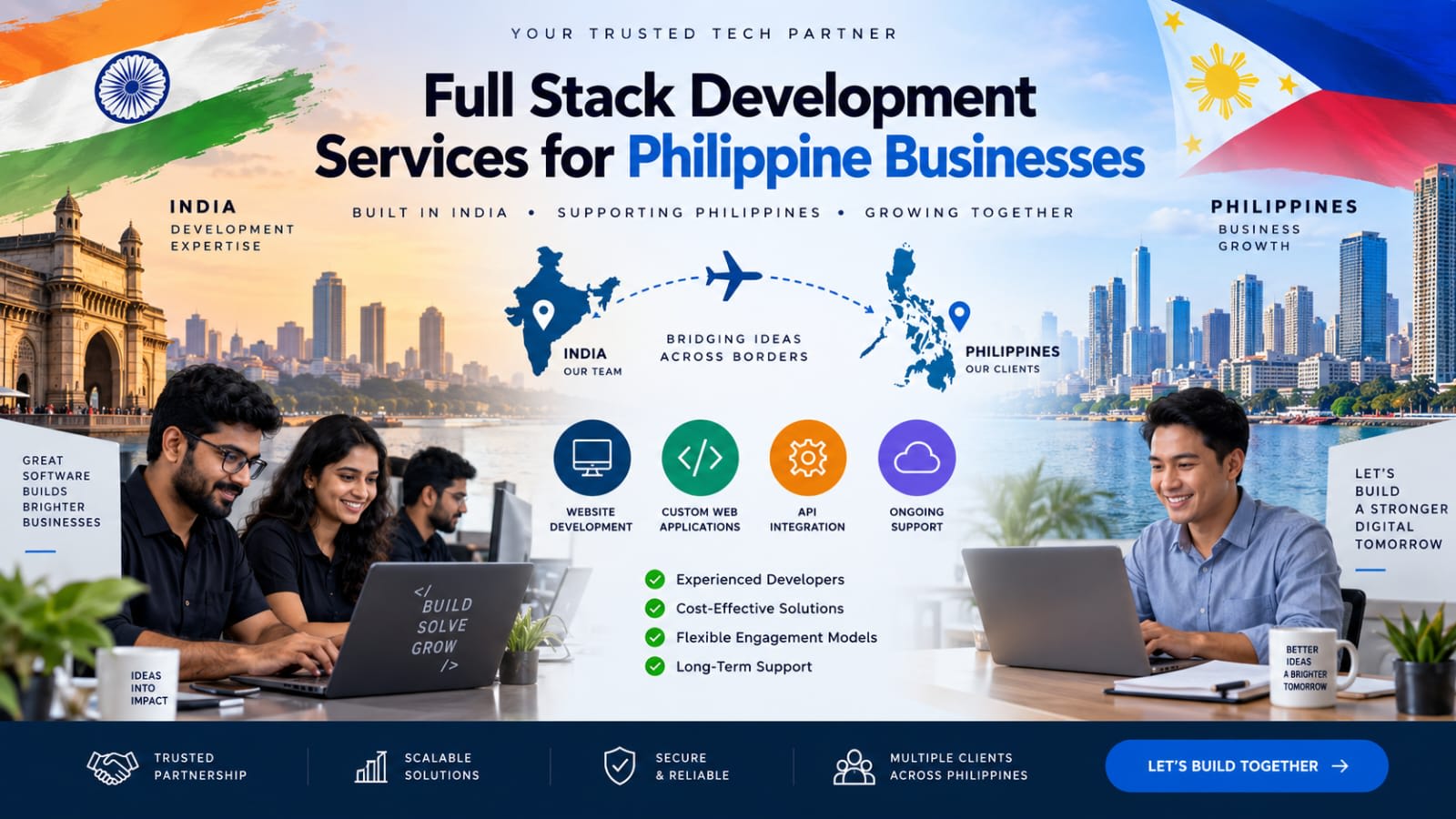
The digital business landscape in the Philippines is evolving rapidly. Companies across industries are investing in modern websites, custom software, and web applications to improve their operations and reach more customers. As businesses become increasingly dependent on digital platforms, having a reliable and scalable technology solution is more important than ever.
Full stack development plays an important role in this transformation. It combines frontend and backend development to create complete web solutions that are functional, secure, responsive, and easy to manage.
Whether a company wants to launch a business website, develop a customer management platform, build an eCommerce application, or automate internal operations, full stack development provides the technical foundation needed for long-term growth.
Full stack development refers to the process of building both the frontend and backend components of a website or web application.
The frontend is the part of an application that users interact with. It includes website layouts, navigation, forms, buttons, dashboards, and other visual elements.
The backend manages the application logic, database operations, user authentication, server communication, and business functionality.
A full stack developer understands how these components work together to deliver a complete digital solution.
Common technologies used in full stack development include:
HTML, CSS, and JavaScript
React and Next.js
Node.js and Express.js
Python and other backend technologies
MongoDB and SQL databases
REST APIs and third-party integrations
By combining these technologies, businesses can develop flexible applications that support their operational requirements.
Businesses in the Philippines are increasingly using digital platforms to connect with customers, manage services, and improve their market presence.
A professional website is no longer just an online business card. It can function as a complete business platform where customers explore services, submit enquiries, make purchases, and access important information.
Full stack development helps businesses create solutions that match their specific requirements rather than depending entirely on generic website templates.
Some important benefits include:
Better Customer Experience: Responsive interfaces and smooth navigation make it easier for customers to interact with business platforms.
Improved Business Operations: Custom applications can automate repetitive tasks, organize information, and simplify daily workflows.
Scalable Technology: Applications can be expanded as business requirements and customer demands increase.
Better Integration: APIs allow different software platforms to communicate and exchange information.
Long-Term Flexibility: Custom development gives businesses greater control over features, functionality, and future improvements.
Frontend development directly influences how customers experience a website or application.
A well-designed frontend should be visually appealing, responsive, accessible, and easy to navigate. Users should be able to find information and complete important actions without unnecessary complications.
Important frontend development practices include:
Responsive layouts for mobile, tablet, and desktop devices
User-friendly navigation and interface design
Fast-loading pages and optimized assets
Interactive forms and dashboards
Consistent design elements
Cross-browser compatibility
Technologies such as React and Next.js help developers create modern interfaces with reusable components and efficient rendering approaches.
For Philippine businesses targeting customers across different devices, mobile-friendly frontend development is particularly important.
While the frontend manages the user experience, the backend powers the application behind the scenes.
It handles important operations such as user registration, login systems, payment processing, database communication, data validation, and application security.
A strong backend ensures that applications operate reliably even when they manage large amounts of information or multiple user requests.
Backend development generally includes:
Server-side application logic
Secure authentication and authorization
Database design and management
API development and integration
Data validation and error handling
Performance optimization
Security and access control
A properly designed backend provides the foundation for building reliable and scalable business applications.
Every business has different operational requirements. A retail company may need an inventory management system, while a financial organization may require a secure customer portal.
Full stack development makes it possible to build industry-specific applications with customized functionality.
Some examples include:
eCommerce Platforms: Online shopping systems with product management, customer accounts, payment integration, and order tracking.
Financial Applications: Loan management portals, eligibility calculators, customer dashboards, and document submission systems.
Education Platforms: Learning management systems with course management, online examinations, student tracking, and certificates.
Healthcare Applications: Appointment booking platforms, patient portals, and administrative management systems.
Real Estate Platforms: Property listing websites, enquiry management, search filters, and customer relationship management integrations.
Custom applications help businesses organize their operations and provide more convenient digital experiences.
Modern business applications often depend on multiple software services. API integration allows different systems to exchange information and work together.
For example, an eCommerce platform may connect with payment gateways, delivery services, email notifications, and inventory management software.
Database management is equally important because business applications need reliable ways to store, retrieve, update, and organize information.
A good database structure supports application performance, data consistency, and future scalability.
Developers may use databases such as MongoDB, PostgreSQL, or MySQL depending on the application's requirements.
Combining effective API integration with proper database architecture helps businesses build connected and efficient digital platforms.
Security should be considered from the beginning of every development project.
Business websites and applications may handle customer details, account information, transactions, and other important data. Weak security practices can create unnecessary risks.
Important security practices include:
Secure authentication and authorization
HTTPS and encrypted communication
Input validation and data sanitization
Secure API access
Regular dependency updates
Database access controls
Backup and recovery planning
Scalability is another important consideration. Applications should be designed so that additional users, features, integrations, and data can be supported as the business expands.
A well-planned architecture helps reduce future development challenges and supports sustainable growth.
Selecting the right development partner can significantly influence the success of a digital project.
Businesses should evaluate technical expertise, development experience, communication practices, and ongoing support before making a decision.
Consider the following factors:
Technical Knowledge: Check experience with modern frontend, backend, database, and API technologies.
Project Portfolio: Review previous projects to understand the quality and complexity of delivered solutions.
Custom Development Approach: Choose a team that understands your business requirements instead of offering the same solution to every client.
Security Practices: Make sure application security and data protection are included in the development process.
Ongoing Support: Look for a development partner who can provide maintenance, updates, troubleshooting, and future improvements.
Clear communication and proper project planning also help ensure that the final application meets business expectations.
The future of software development will continue to be influenced by artificial intelligence, cloud computing, automation, and modern web technologies.
Businesses are exploring smarter applications that can simplify workflows, improve customer engagement, and provide better access to information.
Cloud-based platforms, AI-powered features, mobile-friendly applications, and API-driven systems are becoming important parts of modern digital infrastructure.
Full stack development provides the flexibility to bring these technologies together into practical business solutions.
Companies that invest in reliable and scalable technology today can build a stronger foundation for future digital opportunities.
Full stack development is an important part of modern business growth. By combining frontend interfaces, backend functionality, database management, and API integration, businesses can create complete digital solutions that meet their operational needs.
For Philippine businesses looking to strengthen their online presence, improve efficiency, and develop customized applications, choosing the right development approach can make a significant difference.
Modern Technology provides development-focused solutions designed to help businesses build, innovate, and grow. With the right technology foundation, companies can turn their ideas into secure, scalable, and user-friendly digital experiences.
Mitsafe Engineering Team — Architecting scalable cloud systems and AI automation workflows.
Have an idea or software requirements? Get expert technical guidance & cost estimate in 24 hours.